
Checking for a Warrant in Fayette County
A Fayette County warrant check works as a chain, not one search box. Start by gathering the full name, date of birth, cause number, citation number, court date, and any notice received. Search the public court events first. Then ask the right office for the exact status needed, whether that is a docket entry, a hold, or custody. If arrest or surrender seems possible, a lawyer can help you plan the contact.
- Search Indiana MyCase by cause number, citation, cross-reference number, or party name. Narrow results to Fayette County, the likely court, case type, and filing period.
- Read the chronology for arrest warrant, bench warrant, failure to appear, probation violation, served, recalled, withdrawn, quashed, or reinstated language.
- Call the Fayette County Clerk at 765-825-1813 to confirm the maintained docket, issuing court, public copies, payments, and the next court step.
- Call the Sheriff/Jail at 765-825-1110 about current custody, a hold, service, bond, or surrender. No dedicated warrant line or telephone confirmation promise is posted.
- Route felonies to Circuit Court and misdemeanors, traffic, and ordinance matters to Superior Court. No separate municipal or town court is listed.
- Use a focused APRA or court-record request if a needed public record is not online. Indiana SAVIN can track custody, but it cannot confirm a warrant.
The Fayette Sheriff Page Is a Contact Route
The official Fayette County Sheriff page is not an active-warrant list. It identifies the Sheriff and Correctional Facility at 123 West 4th Street, Connersville, IN 47331, and lists the general number 765-825-1110. Weekday office hours run 8:30 a.m. to 4:00 p.m., with Wednesday hours until 5:00 p.m. The page offers no warrant unit, search form, warrant email, intake appointment, bond-window hours, or ID requirement.
Fayette County Sheriff / Correctional Facility
123 West 4th Street
Connersville, IN 47331
765-825-1110
When you call the Fayette County Sheriff, ask whether staff can address a hold, custody, service, bond, or surrender question. Call first. Do not assume public office hours match jail intake or bond processing.
Fayette County Warrant Types
The type of warrant points to its trigger, legal standard, issuing court, and resolution path. Indiana and Fayette County sources use arrest warrant, bench warrant, and failure-to-appear terms. They do not use "capias pro fine" as a local label.
| Warrant type | How it arises | Who issues it |
|---|---|---|
| Arrest warrant | A charge supported through probable cause or indictment process | Fayette Circuit or Superior Court |
| Bench warrant | A missed appearance or failure to meet a court duty | The judge handling the Fayette case |
| Search warrant | Probable cause to search a described place or item | An authorized judge under Indiana law |
| Failure-to-appear warrant | A required setting is missed and the court orders arrest | Circuit or Superior Court according to the case |
It authorizes an action in a pending case in Fayette County. The court alone decides guilt and the outcome.
Two Courts, One Fayette Clerk
Fayette County's court map is compact. Fayette Circuit Court handles felony criminal matters, while Fayette Superior Court handles misdemeanors, traffic, ordinance violations, and assigned criminal cases. Both sit in the courthouse at 401 N. Central Avenue. One elected Fayette County Clerk keeps both sets of records.
The image below comes from the official county Justice System directory.
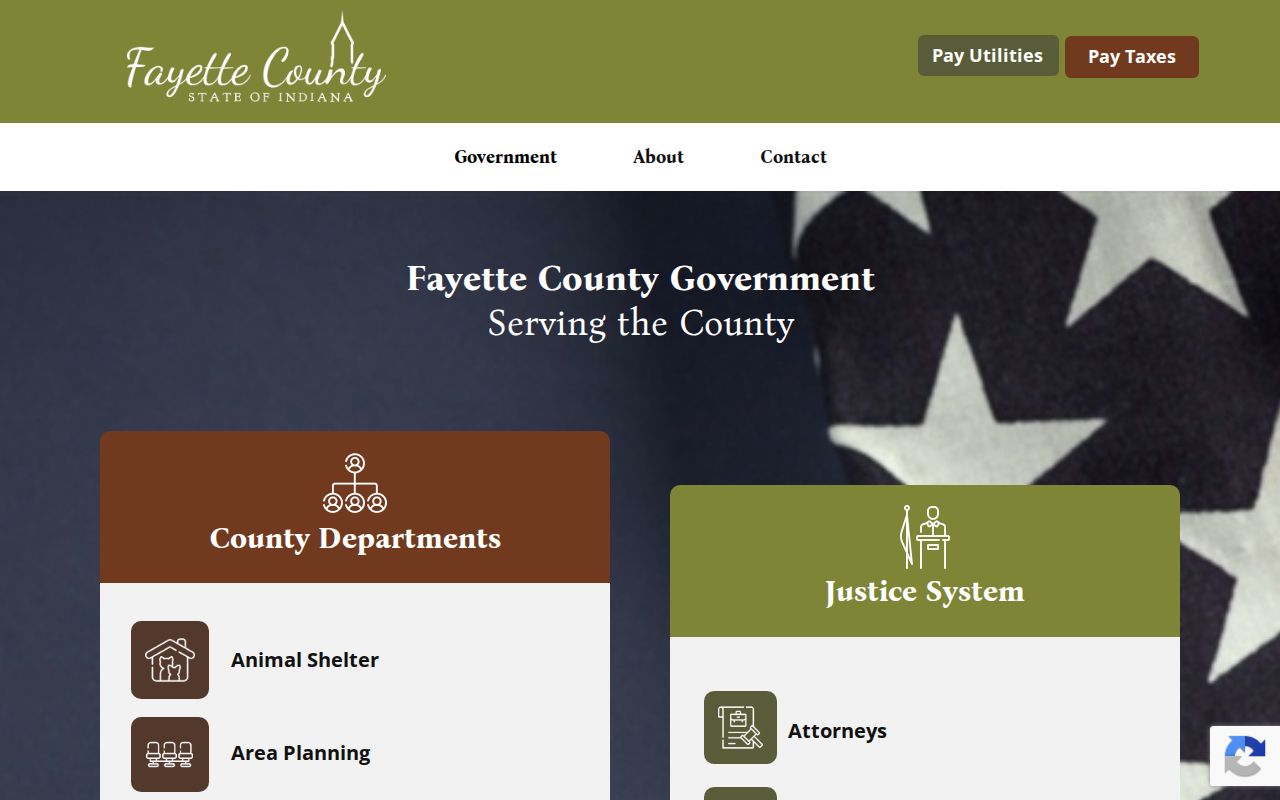
Its court, Clerk, Sheriff, Jail, and Prosecutor links point to the offices behind a Fayette County warrant record. None of them creates a separate warrant portal.
Inside a Fayette County Warrant Record
Fayette County publishes no warrant roster, so no safe sample listing exists. Indiana's written arrest-warrant law and the MyCase schema still identify the core public fields. Access and visibility vary by case.
| Cause number | A code such as 21C01-YY-CR-##### that identifies county, court, year, type, and sequence. |
|---|---|
| Subject | The name or reliable description required in a written arrest warrant. |
| Offense | The alleged offense named in the warrant or related case, not a guilty finding. |
| Issue details | Issue date, Fayette County, and the clerk or judge’s signature and title. |
| Bail | The amount if the warrant permits bail; no Fayette warrant-bond schedule is posted. |
| Status | Events may say issued, served, recalled, quashed, withdrawn, or failure to appear. |
The warrant directs the Fayette County Sheriff and commands that the person be brought before the issuing court without unnecessary delay. MyCase may show only a docket event, not the full instrument.
Start a Fayette Warrant Check in MyCase
The MyCase search guide documents case, citation, cross-reference, party, attorney, court, case-type, status, filing-date, wildcard, and sounds-like searches. Cause number is the strongest route. With only a name, add the first name, middle name, birth date, Fayette County, and the likely case type to cut false matches.
| Field | Use | Limit |
|---|---|---|
| Case or citation number | Direct path to one case | Must match the right person and court |
| Party name and birth date | Narrows shared names | Use for your own or a relative’s matter |
| Court and case type | Focuses on Fayette criminal or traffic records | Options depend on court selection |
| Status and dates | Limits open, closed, and filing ranges | Case status is not warrant status |
MyCase can require CAPTCHA and caps result sets, and it warns that the display may contain errors, omissions, converted events, or incomplete documents. For Fayette County, the maintaining court supplies the official record.
Issuing and Serving Warrants in Fayette County
Courts issue warrants in Fayette County; they do not serve them. Circuit and Superior judges control warrants in their assigned cases. The Clerk maintains court entries and receives criminal, traffic, restitution, fee, and bond payments. The Sheriff and other officers execute warrants and handle custody.
The local flow is straightforward: case filed or court duty missed → judge issues a warrant → Clerk records the event → Sheriff or another officer serves it → the person is brought to court → a later order or service event updates the case.
Fayette County Clerk
401 N. Central Avenue, second-floor north end
Connersville, IN 47331
765-825-1813
Fayette County Sheriff / Jail
123 West 4th Street
Connersville, IN 47331
765-825-1110
Custody, hold, service, bond, and surrender questions
Why MyCase Is Not a Live Warrant Database
A MyCase chronology can show that a warrant event entered a Fayette County case. It cannot guarantee law enforcement still treats the warrant as active at the moment of search. A later recall may not stand out until the full chronology is read, and a new, sealed, confidential, or incomplete event may not appear publicly.
- Issued
- The court created the warrant through an order.
- Outstanding
- The warrant remains open for service, subject to live confirmation.
- Served
- Law enforcement executed the warrant; the underlying case still continues.
- Recalled
- The court withdrew the warrant through later action.
- Quashed
- The court set the warrant aside.
- FTA
- Failure to appear at a required court setting.
Write down the exact words and the date. Then ask the Fayette County Clerk about the maintained docket, and ask the Sheriff or jail about a current hold. Confirming both is more sound than relying on a saved page.
If You Have a Warrant in Fayette County
Do not ignore a possible warrant or walk into a Fayette County office without a plan. Consult an attorney, identify the cause number and issuing court, and ask what surrender, bond, recall, or hearing steps apply. The county publishes no universal warrant-clearance form, walk-in program, amnesty event, or bond schedule. Terms must be confirmed case by case.
Important: Speak with counsel and call the Sheriff/Jail before surrender; ask about the current hold, intake, bond, issuing court, and next appearance.
Possible paths include a planned voluntary surrender, posting the court-set bond, or asking the issuing court to recall or quash the warrant. The Fayette County Clerk can accept bond payments but does not set bond. The county forms index includes a Motion to Reinstate, yet filing one does not automatically recall a warrant. Posting bond can secure release under the order. It does not dismiss the charge or erase probation, traffic, contempt, or hearing duties.
What to Ask Before Walking In
Call with a short, exact list of questions. Ask which court issued the warrant, whether the cause number is correct, and whether a live hold is shown. Ask what bond the judge ordered, where and how payment is accepted, when intake occurs, and which hearing follows. Fayette County pages do not publish accepted bond forms or a separate surrender schedule.
- Confirm the person, cause number, and Fayette court.
- Ask counsel about recall, quash, bond, and surrender choices.
- Call the Clerk about the docket and court instructions.
- Call the Sheriff/Jail about current hold and intake facts.
- Keep each receipt and signed order.
- Recheck both the court event and Sheriff status after action.
Each Fayette County office sets its own hours. The Clerk closes for lunch daily and shuts early Thursday, while court and the Sheriff keep different limits, so one call ahead can save you a wasted trip.
Fayette County Warrant Records and Public Access
Indiana Rule 4 presumes Fayette County court records are open. Rule 5 carves out sealed, expunged, juvenile, and protected material, plus some unserved investigative files. Need one of those? Rule 9 offers a procedure for requesting access to excluded records. Agency records fall under the Indiana Access to Public Records Act, Indiana Code § 5-14-3, which requires reasonable particularity.
Key rules: Court Access Rules 4, 5, and 9 define openness, exclusions, and requests for excluded records. Indiana Code Title 5 contains APRA’s inspection, exemption, fee, and response provisions. Indiana Code Title 35 states arrest-warrant form and criminal-process rules.
Point the office to something specific, like a docket entry, a cause file, or a warrant return. Do not ask for an undefined list. Walk-in or phone requests in Fayette County must be acknowledged within 24 hours. Mail, email, and fax requests get seven calendar days, and production still takes a reasonable time.
A Public Fayette Record Can Stay Restricted
Open courts do not show every warrant. Sealed cases, expunged records, juvenile files, protected personal data, and unserved investigative material can all be withheld before service. A Fayette County judge may also limit documents while leaving a basic case event visible. Want an excluded record? Rule 9 covers the request path, and a lawyer can advise. The Indiana court-record access handbook spells out these statewide access rules.
The handbook covers Fayette County court records. It also keeps public inspection separate from live law-enforcement status.
Note: A blank public search can reflect access law, timing, or search terms, so it cannot prove that no warrant exists.
Traffic Warrants Stay in Fayette Courts
No separate city or town court serves the county. The Indiana court directory shows that, and Superior Court's county page expressly claims misdemeanor, traffic, and ordinance jurisdiction. Skip the hunt for a municipal counter. There isn't one. A missed traffic date or unpaid obligation in Fayette County routes through Superior Court and the Clerk. Under Indiana Code 9-30-3-8, a failure to appear or pay can also bring notice to the Bureau of Motor Vehicles and suspension consequences.
| Need | Local route | Do not confuse it with |
|---|---|---|
| Traffic case event | MyCase, Superior Court, Clerk | A driving-history search |
| Payment or court compliance | Clerk and issuing court | Automatic warrant recall |
| Current hold | Sheriff/Jail | A BMV status alone |
After compliance, confirm the court disposition, any warrant change, the Sheriff hold, and any BMV notice with the Fayette County offices involved. One payment screen cannot prove all four.
Confirm Fayette Warrant Clearance Twice
Court action and Sheriff status are linked but separate. Get the signed order or receipt. Keep the cause number too. After a surrender, bond, recall, quash, reinstatement, or payment, ask the Fayette County Clerk whether the later event reached the docket. Then ask the Sheriff or Jail whether the local hold changed. Traffic matters may add a BMV compliance step as well. No official Fayette source promises instant synchronization. MyCase may keep the old warrant event in case history even after a later event resolves it. Read the chronology in order. When timing matters, an attorney can obtain and interpret the controlling order.
Fayette County Warrants by City
Connersville is the Fayette County seat. It is also the only incorporated city. The 2020 Census counted 13,324 residents there, inside a county population of 23,398. No municipal court layer is listed. City traffic, ordinance, misdemeanor, and warrant questions therefore route into Fayette Superior Court, the county Clerk, and the Sheriff or Jail rather than separate city systems. Where you live does not change that.
Connersville
City residents use MyCase and the Fayette County court, Clerk, and Sheriff channels.
No separate Connersville municipal court is listed in the current Indiana directory.
The county-wide path covers all nine townships. Where you live in Fayette County does not tell you which office issued a warrant; the cause number and the court do.